
What’s actually involved in a switchboard upgrade
When people search for switchboard upgrades on the Central Coast, they’re usually solving a practical problem: the board is old, a circuit keeps tripping, they’re adding a new appliance, or they’ve been told the switchboard needs looking at.
The first step is understanding what’s already there. Some switchboards just need safety switches added. Others need a full replacement because the existing equipment is too old or too small for how the property is being used. An honest assessment of the current board tells you which category you’re in - and that’s where to start before quoting any work.
Signs your switchboard needs upgrading
You don’t need to diagnose the board yourself, but these are the things worth noticing. Any one of them is reason enough to book an inspection, and a few together usually means an upgrade is due:
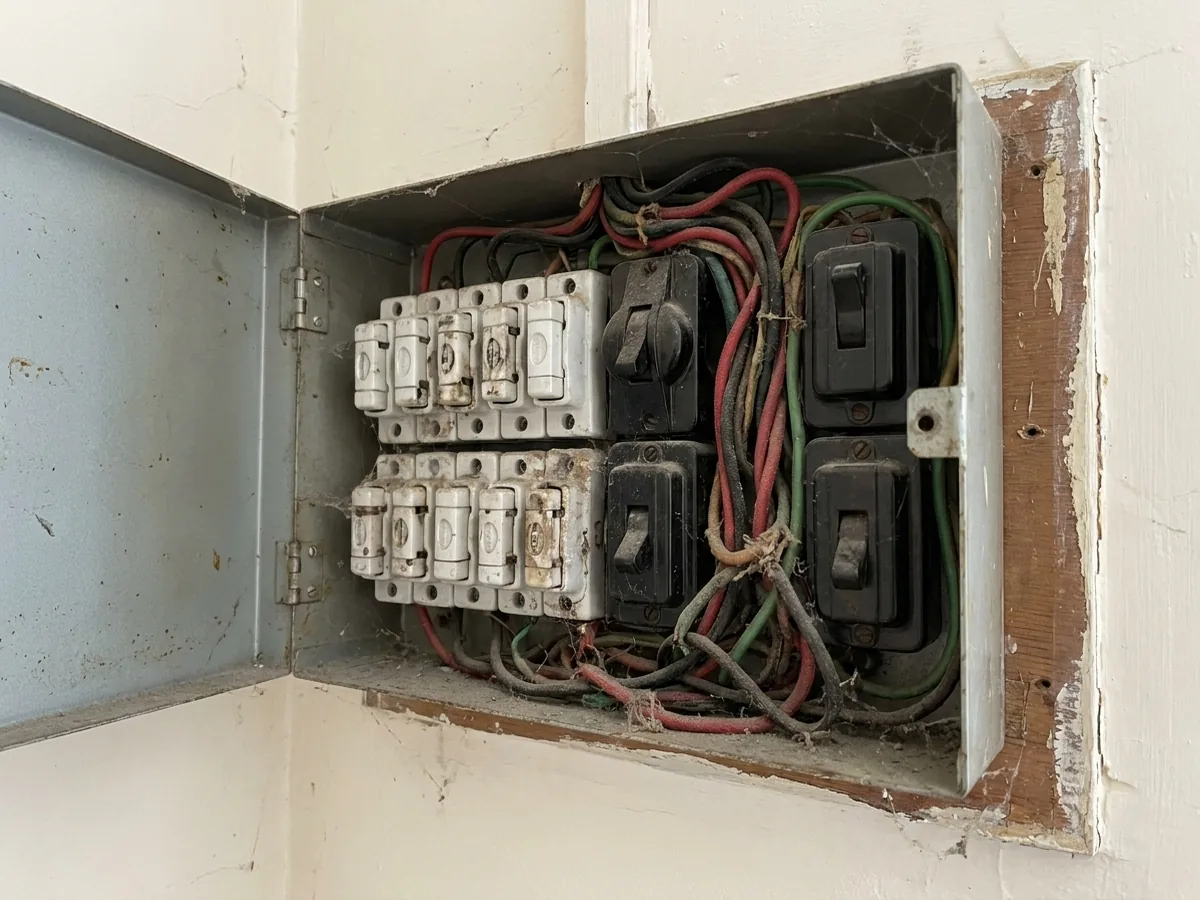
- Ceramic fuses or a fuse box instead of circuit breakers.
- No safety switches (RCDs) on the board.
- Circuits that trip regularly, especially under normal everyday use.
- A board that’s warm to the touch, discoloured or smells of burning.
- Buzzing or crackling coming from the board.
- Lights that flicker or dim when an appliance starts up.
- Having to switch some appliances off to run others.
- A board that’s full, with no spare room to add a circuit.
- You’re adding an EV charger, air conditioning, solar or another high load.
- The board is more than 20 years old, or you’re buying or renovating.
When switchboards become a limiting factor
Most Central Coast homes built before the 1990s have switchboards that weren’t designed for modern appliance loads. Adding a dishwasher, air conditioning, an EV charger or a heat pump hot water system to a board that was sized for a TV, a kettle and a few lights can create real problems - repeated tripping, degraded protection, or a board that simply can’t handle the load.
Older ceramic fuse boards are the most common issue. They have no RCD protection, which means no automatic cut-off if someone gets a shock. They also can’t be expanded to add new circuits safely. In most cases, replacing them outright is both the safer and the more cost-effective decision compared to trying to work around the limitations.
What the upgrade actually changes
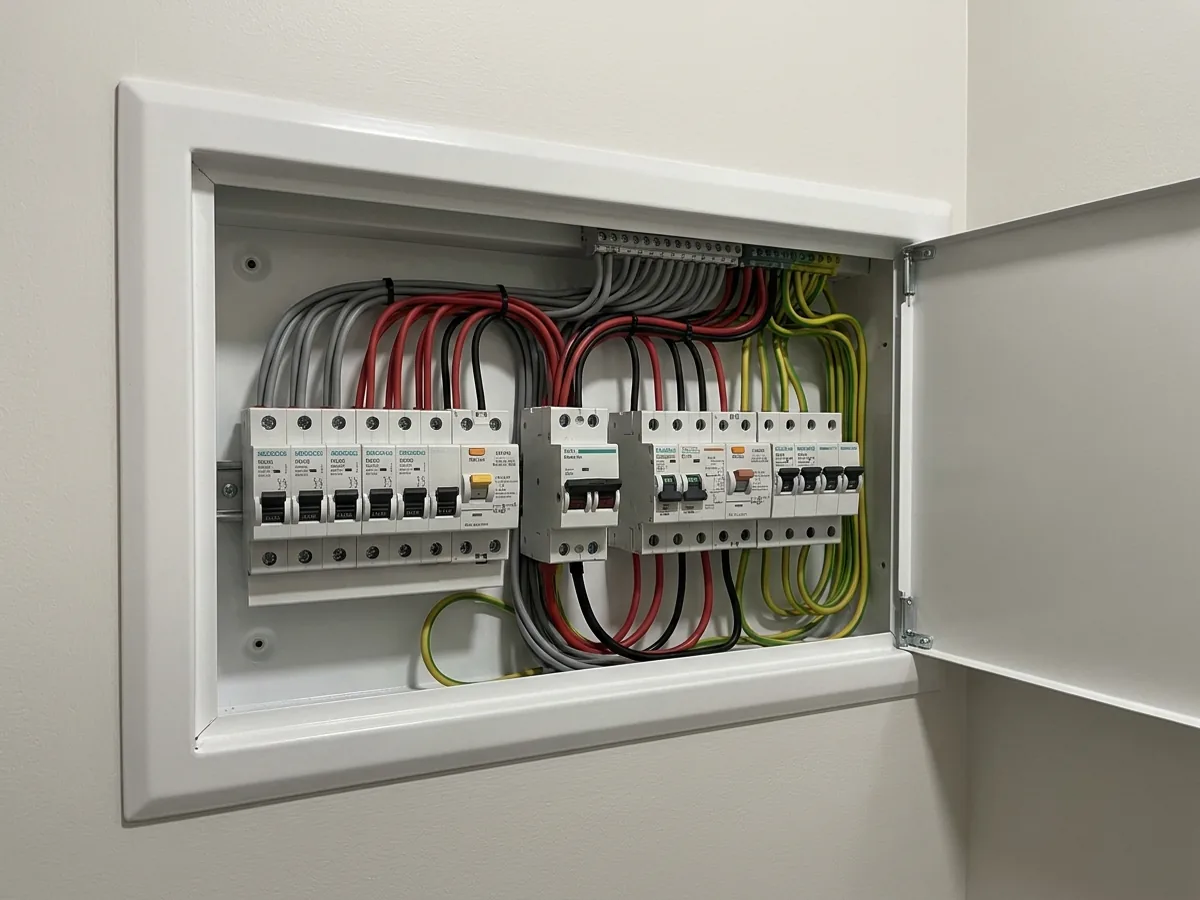
A modern switchboard includes circuit breakers (which protect wiring from overloads) and RCDs or RCBOs (which protect people from electric shock). They’re not the same thing, and older boards often have one but not the other.
A properly upgraded board also gives you room to add circuits later - EV charger, solar, battery storage, extra GPOs - without having to revisit the switchboard again. That’s worth thinking through at quote stage, especially if any of those upgrades are on the horizon.
What a switchboard upgrade costs on the Central Coast
The first thing most people want to know is the cost, and the honest answer is that it depends on the board. As a general guide, switchboard upgrades on the Central Coast tend to fall into these ranges:
- Straightforward upgrade - adding safety switches and circuit breakers to a sound board: roughly $900 to $1,400.
- Fuller upgrade - multiple RCDs or RCBOs, extra circuits and a tidy reconfiguration: roughly $1,200 to $2,000.
- Older homes with ceramic fuse boards - usually more to bring up to standard: roughly $1,800 to $3,000.
- Full board replacement, three-phase, or supply and metering work: $2,000 to $4,000 or more.
Treat those as a guide rather than a quote. What actually moves the price on any given job is:
- The condition and type of the existing board - a clean swap costs less than a board that’s been added to over decades.
- How many circuits need protecting, and whether they need RCDs, RCBOs or a full reconfiguration.
- Whether the supply is single-phase or three-phase.
- The state of the meter box, consumer mains and enclosure, especially in older homes.
- Access, and whether an older board sits on an asbestos backing panel that needs careful handling.
- Any service disconnection or metering fees charged by the network provider.
That’s why Ed inspects the board first and gives a fixed quote based on the real site conditions, rather than a number pulled from a photo. If the board doesn’t need replacing, he’ll tell you that too.
How a switchboard upgrade works, step by step
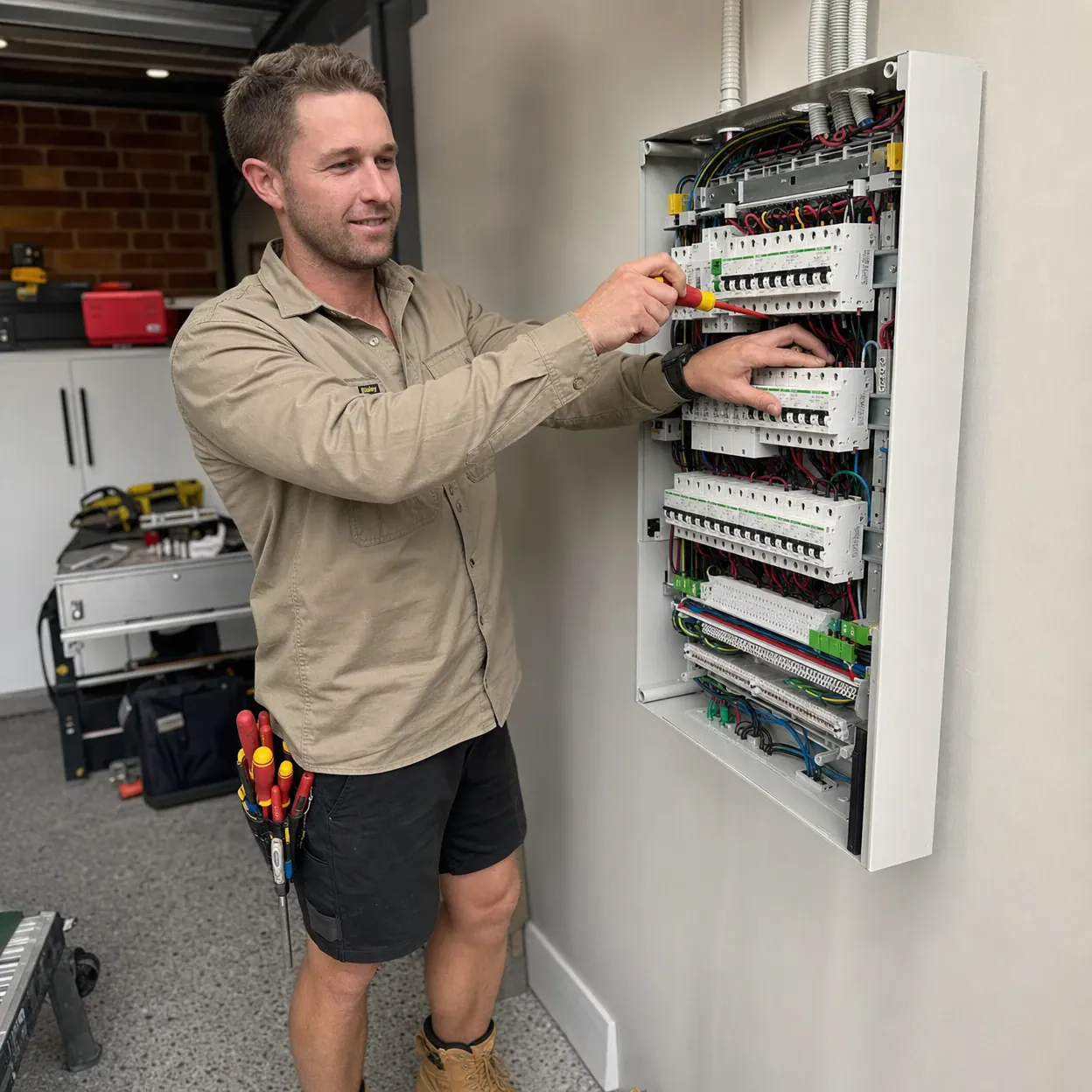
- Inspection and quote. Ed checks the existing board, circuits and protection, works out what the property needs now and allows for what’s coming - an EV charger, air conditioning or a renovation - and gives you a fixed quote.
- Installation. On the day, the supply is safely isolated, the old board is removed, the new board is fitted, circuits are transferred and clearly labelled, and safety switches are installed. Most domestic upgrades are completed within a day.
- Testing and certification. The installation is tested - insulation resistance, earth continuity, RCD trip testing and polarity - and you’re issued a Certificate of Compliance for Electrical Work as your record that it meets the standard.
Switchboard upgrades and Australian compliance
Switchboard work in NSW has to be carried out by a licensed electrician and meet the AS/NZS 3000 Wiring Rules. One rule matters more than most at upgrade time: under the current Wiring Rules, once the circuit protection on a board is replaced, safety switches (RCDs) are required on the final subcircuits. In plain terms, a genuine board upgrade brings your home up to the current safety-switch standard, not just back to working order. If protection is your main concern, the safety switches and RCDs page goes into more detail.
When the work is finished, your electrician issues a Certificate of Compliance for Electrical Work (CCEW) - the formal record that the installation was tested and complies. Ed handles that as part of the job.
Related electrical planning
Switchboard work often lines up with other upgrades. A board upgrade is usually the right time to add EV charger supply if that’s on the cards. Fault finding can reveal that a circuit problem is actually a switchboard issue. And renovation work regularly brings switchboard capacity to the surface before anything new is added.
If you’re not sure whether a switchboard upgrade is the right starting point for your situation, a quick conversation about the property and what’s happening is usually enough to narrow it down.
Related next steps often include EV Charger Installation Central Coast and Fault Finding Electrician Central Coast . If you are comparing local coverage as well, start with Electrician in Erina NSW or Electrician in Gosford NSW .